
The 'fish symbol' is today instantly recognised as a Christian symbol but this symbol was in use by Pagans for many generations before Christianity.
Ask any Neopagan and they will explain the most common interpretation is its derivation from a simplified image of a woman's womb or vagina. The fish symbol was often drawn by overlapping two thin crescent moons, signifying a woman's monthly cycle. (See also Lunate Cross.)
In Babylonian mythology, a fish pushed a giant egg out of the river Euphrates, and from this egg emerged the mermaid and fertility goddess of the seas, Atargatis. The son of Atargatis was named Ichthys; a name later used by Christians to refer to Jesus. See the Ichthys Cross.

The ichthys or ichthus (/ˈɪkθəs/[1]), from the Greek ikhthýs (ἰχθύς, "fish"), is a symbol consisting of two intersecting arcs, the ends of the right side extending beyond the meeting point so as to resemble the profile of a fish. It was used by early Christians as a secretChristian symbol[2] and now known colloquially as the "sign of the fish" or the "Jesus fish".[3]
History
Origins
Greeks, Romans, and many other pagans used the fish symbol before Christians. In pagan beliefs, Ichthys was the offspring of the ancient sea goddess Atargatis, and was known in various mythic systems as Tirgata, Aphrodite, Pelagia, or Delphine. The word also meant "womb" and "dolphin" in some tongues. Before Christianity adopted the fish symbol, it was known by pagans as "the Great Mother", and "womb". Its link to fertility, birth, and the natural force of women was acknowledged also by the Celts, as well as pagan cultures throughout northern Europe. In certain non-Christian beliefs the fish also has been identified with reincarnation and the life force.[4]
Symbolic meaning[edit]

ΙΧΘΥΣ (Ichthus) is a backronym/acrostic[5] for "Ίησοῦς Χριστός, Θεοῦ Υἱός, Σωτήρ", (Iēsous Christos, Theou Yios, Sōtēr), which translates into English as "Jesus Christ, Son of God, Saviour".
- Iota (i) is the first letter of Iēsous (Ἰησοῦς), Greek for "Jesus".
- Chi (ch) is the first letter of Christos (Χριστός), Greek for "anointed".
- Theta (th) is the first letter of Theou (Θεοῦ), Greek for "God's", the genitive case of Θεóς, Theos, Greek for "God".
- Upsilon (y) is the first letter of (h)uios[6] (Υἱός), Greek for "Son".
- Sigma (s) is the first letter of sōtēr (Σωτήρ), Greek for "Savior".
This explanation is given among others by Augustine in his Civitate Dei,[7] where he notes that the generating sentence " Ἰησοῦς Χριστὸς [sic] Θεοῦ Υἱὸς Σωτήρ" has 27 letters, i.e. 3 x 3 x 3, which in that age indicated power. (This suggestion is obviously spurious, resulting from Augustine's ignorance of Greek.) [8] Augustine quotes also an ancient text from the Sibylline oracles[9] whose verses are an acrostic of the generating sentence.
A fourth century A.D. adaptation of ichthys as a wheel contains the letters ΙΧΘΥΣ superimposed such that the result resembles an eight-spoked wheel.[10]
Fish in the Gospels[edit]
Fish are mentioned and given symbolic meaning several times in the Gospels. Several of Jesus' twelve Apostles were fishermen. He commissions them with the words "I will make you fishers of men".
At the feeding of the five thousand, a boy is brought to Jesus with "five small loaves and two fish". The question is asked, "But what are they, among so many?" Jesus multiplies the loaves and fish to feed the multitude. In Matthew 13:47-50, the Parable of Drawing in the Net, Jesus compares God's decision on who will go to heaven or to hell ("the fiery furnace") at the end of this world to fishers sorting out their catch, keeping the good fish and throwing the bad fish away.[12] In John 21:11, it is related that the disciples fished all night but caught nothing.[13] Jesus instructed them to cast the nets on the other side of the boat, and they drew in 153 fish. In Matthew 17:24-27, upon being asked if his Teacher pays the temple (or two-drachma) tax, Simon Peter answers yes. Christ tells Peter to go to the water and cast a line, saying that a coin sufficient for both of them will be found in the fish's mouth. Peter does this and finds the coin.[14]
The fish is also used by Jesus to describe "the Sign of Jonah". (Matthew 12:38-45) This is symbolic of the resurrection of Christ upon which the entire Christian faith is based. ( 1 Corinthians 15:1-58)
Early church[edit]
According to tradition, ancient Christians, during their persecution by the Roman Empire in the first few centuries after Christ, used the fish symbol to mark meeting places and tombs, or to distinguish friends from foes:

There are several other hypotheses as to why the fish was chosen. Some sources indicate that the earliest literary references came from the recommendation of Clement of Alexandria to his readers (Paedagogus, III, xi) to engrave their seals with the dove or fish. However, it can be inferred from Roman monumental sources such as the Cappella Greca and the Sacrament Chapels of the catacomb of St. Callistus that the fish symbol was known to Christians much earlier. Another probable explanation is that it is a reference to the scripturein which Jesus miraculously feeds 5,000 people with fish and bread Matthew 14:15-21, Mark 6:30-44, Luke 9:12-17, and John 6:4-13).[15][16][17][18] The ichthys may also relate to Jesus or his disciples as "fishers of men" (e.g., Mark 1:17).[19][20] Tertullian, in his treatise On Baptism, makes a pun on the word, writing that "we, little fishes, after the example of our ΙΧΘΥΣ Jesus Christ, are born in water."[21] Still another explanation could be the reference to the sign of Jonah. Just like he was in the belly of a big fish, so Christ was crucified, entombed for three days, and then rose from the dead.

The Christian Fish Symbol
also called 'The Jesus Fish'


Convenção Batista Brasileira (Brazillian Baptist Convention)

Magyarországi Evangélikus Egyház(Evangelical Lutheran Church in Hungary)

Þjóðkirkjan(Evangelical Lutheran Church of Iceland)
The Christian fish symbol is usually just two simple curved lines. Modern looking and sleek, incorporated in several church emblems and often seen on car bumpers, it gives many people the impression that it's a new symbol. In fact, its history goes back even further than the cross as a symbol used by Christians.
As early as the 2nd century Titus Flavius Clemens (St. Clement of Alexandria), suggested that Christians identify themselves with a seal depicting a fish or dove. Even before that time, inscriptions on monuments. suggest that the fish symbol was familiar to Christians.
Why the fish and not the cross?
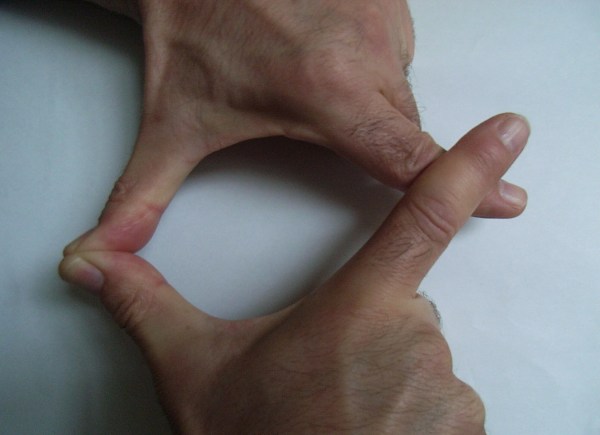
A possible identity sign for early Christians
Early Christiansneeded no reminder of how Jesus died; they saw it in its most hideous form all too frequently. Even in the fish symbol, we can see an X-shapped cross in the tail.
As in the miracle of the Loaves and Fishes, the fish is a symbol of baptism and as such, an appropriate symbol for Christians to adopt. Fish swim in deep water yet do not drown; indeed, they need to be immersed in water in order to survive. Similarly for us to survive spiritually, we need to be baptised by immersion into the waters of Christ's love; the love he showed by dying on the cross.

After Christ's Crucifixion his followers were persecuted and the fish symbol was used as an identifying symbol that fellow Christians would recognise, but others would not. Therefore Christians could connect with each other through a secret code, such as a fish symbol, without revealing themselves to the oppressors.
The fish was considered important enough to be mentioned many times in the Bible and more recently there have been several additional thoughts about the early use of this symbol. Carl Liungman wrote in his magisterial volume 'Dictionary of Symbols':.

Virgo

Phoenician symbol for 'fish'
"... 'Virgo' is based on the Hebraic letter 'mem' and the Phoenician symbol meaning 'fish'. It became, early on, a sign representing Jesus and the mystery of His virginal birth."

Mandorla
As with the nimbus or mandorla this sign may be surrounded by the aurelia or gloria, emitting rays of light and is, heraldically, limited to surrounding the Trinity or any member of the Trinity, most often Jesus. (Images of Mary may be seen surrounded by a mandorla but only if she holds the Christ Child in some way.)

Three of these interwoven shapes form a triquetra; a symbol of the Trinity. The triquetra is the basis of the Carolingian Cross.
What is "Ichthys"?
Clemens was a Greek theologian and noted that letters of the Greek word for fish, ΙΧΘΥΣ (pronounced Ichthys), made the following neat little acrostic:
| Ι (Iota) Ιησοῦς | Χ (Chi) Χριστός | Θ (Theta) Θεος | Υ (Upsilon) Υἱός | Σ (Sigma) Σωτήρ |
| Iesous | Christos | Theou | Yios * | Soter |
| Jesus | Christ | God's | Son | Saviour |
| (* pronounced Iios - with emphasis on the 'o') | ||||
So in addition to the simple and easily recognisable symbol, there is also a motto that describes Jesus as Christ, God's Son, and Saviour.

This use of the fish might also have been partly a protest against the Pagan emperors of the time, who named themselves Theou Yios (God's sons), which appears on Alexandrian coins minted during of the reign of Domitian, 11th Emperor of the Roman Empire, 81-96 AD.
What else is associated with the fish?

The Greek character for alpha (α) is similar to the fish symbol, as is the Omega (Ω) if rotated 90°. This may also have had some influence on the decision for Christians to adopt the symbol, since Jesus calls himself "the Alpha and the Omega" – the beginning and the end. (See also Alpha and Omega Cross.)

XP
And if we rotate the Runic character for "O" (ᛟ) by 90°, it doesn't take too much imagination to see "X" and "P" in the symbol, which form the monogram of Christ. (See also Chi-Rho Cross.)
Backronym
A backronym or bacronym is a specially constructed phrase that is supposed to be the source of a word that is, or is claimed to be, anacronym. Backronyms may be invented with serious or humorous intent, or may be a type of false or folk etymology.
The word is a combination of backward and acronym, and has been defined as a "reverse acronym".[1] Its earliest known citation in print is as "bacronym" in the November 1983 edition of the Washington Post monthly neologism contest. The newspaper quoted winning reader Meredith G. Williams of Potomac, Maryland, defining it as the "same as an acronym, except that the words were chosen to fit the letters".[1][2]
Differences from acronyms[edit]
An acronym is a word derived from the initial letters of the words of a phrase:[3] For example, the word radar comes from "Radio Detection and Ranging".[4]
By contrast, a backronym is constructed by creating a new phrase to fit an already existing word, name, or acronym. For example, the United States Department of Justiceassigns to their Amber Alert program the meaning "America's Missing: Broadcast Emergency Response",[5] although the term originally referred to Amber Hagerman, a 9-year-old abducted and murdered in Texas in 1996. Backronyms are also often used for comedic effect, as exemplified by NASA's C.O.L.B.E.R.T.[6]
Examples[edit]
 | The examples and perspective in this section may not represent a worldwide view of the subject. (April 2015) |
Backronyms can be constructed for educational purposes, for example to form mnemonics. An example of such a mnemonic is the Apgar score, used to assess the health of newborn babies. The rating system was devised by and named after Virginia Apgar, but ten years after the initial publication, the backronym APGAR was coined in the US as a mnemonic learning aid: Appearance, Pulse, Grimace, Activity and Respiration.[7]
Alcoholics Anonymous and other 12-step programs use backronyms as teaching tools, similar to slogans such as "one day at a time", or "Let go, let God", but often with an ironic edge. For example, a slip may be expanded as "Sobriety Losing Its Priority",[8] and denial as "Don't Even Notice I Am Lying".[9]
Backronyms are also created as jokes or as slogans, often expressing consumer loyalties or frustration. For example, the name of the restaurant chain Arby's is a play on the letters "RB", referring to the company's founders, the Raffel brothers. An advertising campaign in the 1980s created a backronym with the slogan "America’s Roast Beef, Yes Sir!"[10]
NASA named its ISS treadmill the Combined Operational Load-Bearing External Resistance Treadmill (C.O.L.B.E.R.T.) after Stephen Colbert. The backronym was a lighthearted compromise in recognition of the comedian's ability to sway NASA's online vote for the naming of an ISS module.[6]
Some backronyms name the subject to make obvious its purpose or characteristics; the GBU-43/B Massive Ordnance Air Blast bomb (abbreviated MOAB) and others in the series were heavily promoted by the United States as the 'Mother of All Bombs', a backronym during the Iraq War. US news coverage in the days leading up to the United States2003 invasion of Iraq claims 'Mother of All Bombs' to be the US response to Saddam Hussein's phrase "mother of all battles" from the first Gulf War.[11]
In commercial aviation, ETOPS is officially an acronym for Extended-range Twin-engine Operational Performance Standards,[12] defining safety standards for long-distance over-water flights by planes with only two engines, but in aviation vernacular, the colloquial backronym is "Engines Turn Or Passengers Swim."[13]
Many companies or products spawn multiple humorous backronyms, with positive connotations asserted by supporters or negative ones by detractors. For example, the car company Ford was said to stand for "First On Race Day", by aficionados,[14] but disparaged as "Fix Or Repair Daily", by critics.[15][16] Similar backronyms have been directed against many other automakers, such as "Fix It Again Tony" for Fiat.[17][18]
Backronyms are sometimes created to name laws or programs. The official title of the USA PATRIOT Act, a 2001 Act of the U.S. Congress, is "Uniting and Strengthening America by Providing Appropriate Tools Required to Intercept and Obstruct Terrorism (USA PATRIOT) Act of 2001".[19]
As false etymologies[edit]
Sometimes a backronym is so commonly heard that it is widely but incorrectly believed to have been used in the formation of the original word, and amounts to a false etymologyor an urban legend. Examples include posh, an adjective describing stylish items or members of the upper class. A popular story derives the word as an acronym from "Port Out, Starboard Home", referring to first class cabins shaded from the sun on outbound voyages east and homeward heading voyages west.[20] The word's actual etymology is unknown, but it may relate to Romani påš xåra ("half-penny") or to Urdu safed-pōśh (one who wears "white robes"), a derogatory term for wealthy people.[21]
Lexicographer Jesse Sheidlower writes in his book The F-Word that acronyms were rare in the English language prior to the twentieth century, and most etymologies of common words or phrases that suggest origin from an acronym are false.[22]
Other examples include the brand name Adidas, named for company founder Adolf "Adi" Dassler but falsely believed to be an acronym for "All Day I Dream About Sports";[23]Wiki, said to stand for "What I Know Is",[24] but in fact derived from the Hawaiian phrase wiki-wiki meaning "fast";[25] or Yahoo!, sometimes claimed to mean "Yet Another Hierarchical Officious Oracle", but in fact chosen because Yahoo's founders liked the word's meaning of "rude, unsophisticated, uncouth."[26]
The distress signal SOS (with the overbar indicating that it is a prosign, sent as a single Morse character) is often believed to be an abbreviation for "Save Our Ship" or "Save Our Souls". In fact, it was chosen because it has a simple and unmistakable Morse code representation – three dots, three dashes, three dots, all sent without any pauses between characters.[27]
BLUEJEW BUBBLE BURST BELOW BE WARNED


No comments:
Post a Comment